
Binaural Beats and Sleep: How Sound Can Help You Rest Better
Getting enough quality sleep can feel impossible when your mind won’t stop racing at night. Many people struggle to fall asleep or stay asleep, leading them to search for natural solutions that don’t involve medication. Binaural beats offer a drug-free option that uses sound to help your brain relax and prepare for rest.
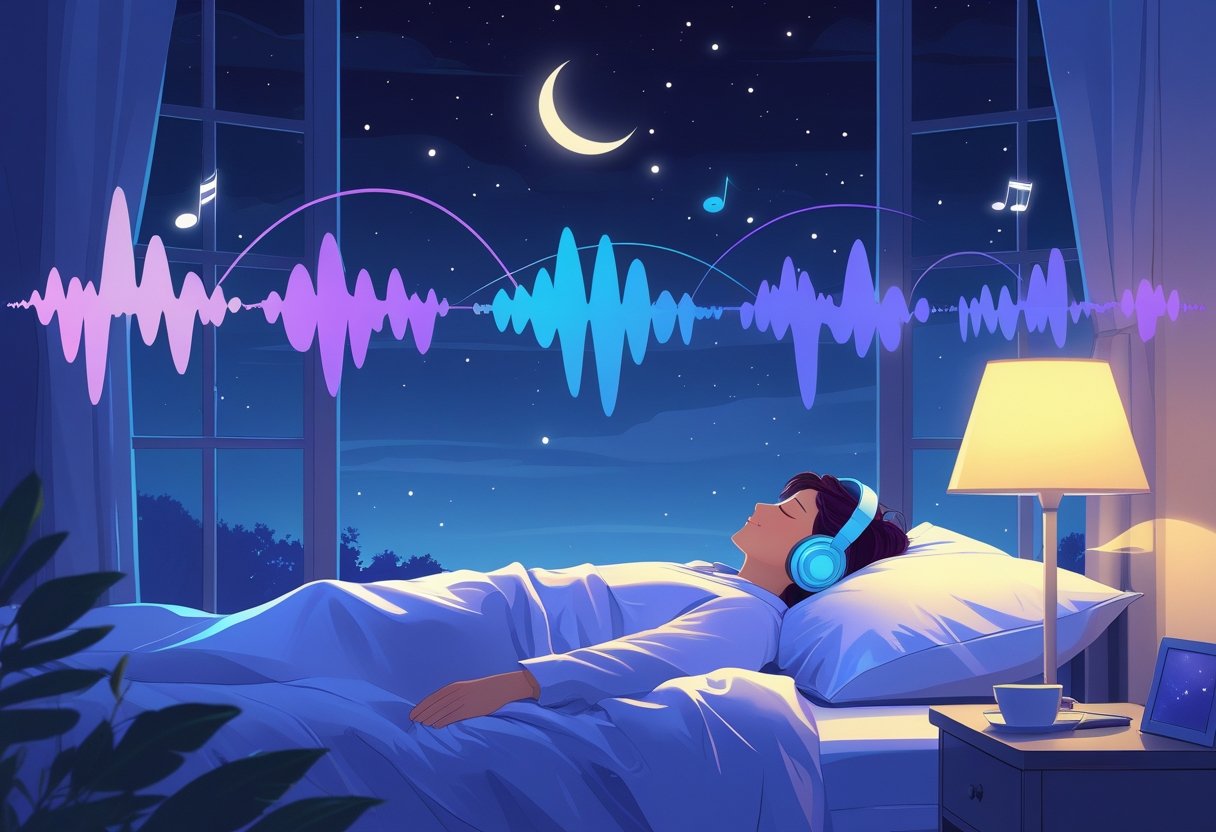
Binaural beats work by playing two slightly different sound frequencies in each ear, which causes your brain to create a third tone that can match the slower brain waves associated with deep sleep. When you listen to these beats through headphones, your brain begins to sync with the frequency. This process can help you feel calmer and make it easier to drift off.
The idea of using sound to improve sleep might seem strange at first. But research shows that listening to specific frequencies before bed can actually change your brain activity. This makes binaural beats worth considering if you want to try something new for better sleep.
Key Takeaways
- Binaural beats use different sound frequencies in each ear to help your brain produce slower waves that support sleep
- Delta and theta frequencies work best for sleep, with delta waves under 4 Hz being ideal for deep rest
- You need to use headphones and listen for at least 15-30 minutes before bed to see results
How Binaural Beats Work for Sleep
Your brain creates a unique sound perception when it receives two slightly different frequencies in each ear, and this process can shift your mental state from alert to sleepy. The key lies in how your brain responds to these frequency differences and syncs up with slower brainwave patterns.
The Science Behind Binaural Beats
When you play two separate tones through headphones, one in each ear, your brain doesn’t hear them as two distinct sounds. Instead, it creates a third tone that doesn’t actually exist in the audio file. This happens in the part of your brain that processes sound location.
For example, if you hear 300 Hz in your left ear and 310 Hz in your right ear, your brain produces a 10 Hz beat. This only works when both tones are below 1000 Hz and the difference between them is less than 35 Hz.
Your brain produces different types of waves throughout the day. Delta waves (under 4 Hz) happen during deep sleep, while theta waves (4-8 Hz) occur during light sleep and drowsiness. When you listen to binaural beats at these lower frequencies, your brain can start to match them.
Frequency Following Response
Your brain naturally tries to sync up with rhythmic patterns it encounters. This is called frequency following response. When you listen to binaural beats for several minutes, your brainwaves begin to align with the frequency of the beat you’re hearing.
Studies show that listening to binaural beats at 3 Hz can increase delta wave activity in your brain. This matters because delta waves are what you need for deep, restorative sleep. One study found that these beats lengthened stage three sleep, which is when your body does most of its healing and recovery.
Soccer players in another study listened to beats between 2-8 Hz and reported better sleep quality, less daytime sleepiness, and easier wake-ups. The beats helped their brains shift into sleep-friendly patterns.
Why Two Different Tones Are Key
You need both ears to receive different frequencies for binaural beats to work. If you remove one earbud, the effect stops completely. This is different from regular music or white noise, which works fine through one speaker.
The separation of tones creates the conditions for your brain to generate that third beat. A single tone or the same tone in both ears won’t trigger this response. That’s why headphones or earbuds are required, not regular speakers.
The volume should stay at a comfortable level, well below 85 decibels, to protect your hearing. Some tracks include gentle background sounds like white noise or nature sounds to help you relax while the binaural beats do their work.
Best Binaural Frequencies for Sleep
Different brain wave frequencies work with your natural sleep cycle in specific ways. Delta waves support the deepest sleep stages, theta waves help you transition from awake to asleep, and alpha waves calm your mind when you’re preparing for bed.
Delta Waves for Deep Sleep
Delta waves operate between 0.5 and 4 Hz. These are the slowest brain waves your body produces during sleep.
Your brain naturally creates delta waves during the deepest stages of sleep. This is when your body repairs tissues, builds bone and muscle, and strengthens your immune system. When you listen to binaural beats in the delta range, you’re encouraging your brain to match these slow frequencies.
Most people use delta frequency binaural beats when they want to stay asleep longer or reach deeper sleep stages. If you wake up feeling tired even after sleeping for hours, delta waves might help you get more restorative rest.
The best approach is to play delta binaural beats throughout the night at a low volume. You can also use them during naps when you want deep rest in a short time.
Theta Waves for Sleep Transition
Theta waves range from 4 to 8 Hz. Your brain moves into theta wave patterns when you’re drowsy and drifting off to sleep.
This frequency range bridges the gap between being awake and falling asleep. Theta waves show up during light sleep and the early sleep stages. They also appear during deep meditation and when you’re daydreaming.
Binaural beats in the theta range work well if you struggle to fall asleep at night. They help quiet racing thoughts and ease you from alertness into sleep mode. Many people also use theta frequencies for lucid dreaming since this brain state is linked to dream activity.
Start playing theta binaural beats about 20 to 30 minutes before you want to fall asleep. This gives your brain time to sync with the frequency and prepare for sleep.
Alpha Waves for Relaxation
Alpha waves fall between 8 and 13 Hz. These frequencies appear when you’re awake but calm and relaxed.
You produce alpha waves when you’re sitting quietly with your eyes closed or doing gentle activities. This brain state feels peaceful and stress-free. Alpha waves create a bridge between active thinking and rest.
Using alpha frequency binaural beats before bed helps you wind down from a busy day. They’re useful if you feel stressed or your mind is too active to sleep. Alpha waves don’t directly put you to sleep, but they create the right mental state for sleep to happen naturally.
Try listening to alpha binaural beats during your bedtime routine. Play them while you read, stretch, or do breathing exercises to maximize the relaxation effect.
Benefits of Using Binaural Beats at Bedtime
Using binaural beats before bed can help you fall asleep more quickly, sleep more deeply, and feel calmer when you’re trying to rest. These sound waves work with your brain to create the right conditions for quality sleep.
Falling Asleep Faster
Binaural beats can cut down the time it takes you to drift off at night. When you listen to beats in the theta range (4-8 Hz) or delta range (under 4 Hz), your brain starts to match these slower frequencies. This process is called entrainment.
Your brain naturally slows down as you get ready for sleep. Binaural beats speed up this process by encouraging your brain to move into sleep-friendly patterns right away.
Studies with athletes show that listening to binaural beats between 2-8 Hz helped them fall asleep easier. They also reported less trouble waking up in the morning. The beats work best when you use headphones or earbuds so each ear gets a different frequency.
You might need to try different track lengths to find what works for you. Some people feel sleepy after 15 minutes, while others need 30 minutes or more.
Improved Sleep Quality
Binaural beats at delta frequencies (3 Hz) can make your sleep deeper and more restful. Research shows these beats increase delta wave activity in your brain during stage three sleep. Stage three is the deepest part of your sleep cycle.
This deep sleep stage is when your body does most of its repair work. You wake up feeling more refreshed when you spend enough time in stage three. People who use binaural beats often report better overall sleep quality, not just longer sleep times.
The beats help keep you in deeper sleep stages for longer periods. This means fewer times waking up during the night and more consistent rest throughout the sleep cycle.
Reducing Nighttime Anxiety
Anxiety can make it hard to fall asleep and stay asleep. Binaural beats in the alpha range (8-13 Hz) help calm your mind before bed. Some early studies found that people listening to binaural beats felt less anxious before medical procedures.
When you feel less anxious, your body can relax more fully. Your heart rate slows down, your breathing gets deeper, and your muscles release tension. This relaxed state makes it easier for sleep to happen naturally.
Binaural beats work best when combined with other calming sounds like white noise or nature sounds. These extra sounds help mask any frustration some people feel from the beats alone. The key is finding tracks that feel soothing to you personally.
How to Use Binaural Beats for Better Sleep
Getting started with binaural beats requires selecting appropriate frequencies, creating a calm space for listening, and timing your sessions correctly for maximum benefit.
Choosing the Right Audio Tracks
Look for tracks that use delta waves (0.5 to 4 Hz) or theta waves (4 to 8 Hz) since these frequencies match the brain patterns associated with deep sleep. Delta waves work best for promoting the deepest stages of sleep, while theta waves help with the transition from wakefulness to light sleep.
You’ll find binaural beats on streaming platforms, apps, and websites. Pick tracks that combine the binaural tones with gentle background sounds like rain, ocean waves, or soft music. These extra sounds make listening more pleasant and help mask distracting noises.
Make sure the audio quality is clear and consistent. Poor quality recordings with crackling or uneven volume won’t give you the results you want. Read reviews or try sample clips before committing to a specific track or app.
Ideal Listening Environment
Your listening space directly affects how well binaural beats work. Find a quiet room where you won’t be interrupted by noise or people walking in.
Keep the room dark or dimly lit to signal your brain that it’s time to wind down. Turn off bright screens and close curtains if needed.
You must use headphones or earbuds because binaural beats require different frequencies in each ear. Regular speakers won’t create the effect your brain needs to produce the target frequency. Choose comfortable headphones that won’t hurt your ears during extended wear.
Set your volume at a comfortable level that’s easy to hear but not loud. The binaural effect works at moderate volumes, and playing audio too loud can damage your hearing over time.
When and How Long to Listen
Start your listening session 15 to 30 minutes before you plan to fall asleep. This gives your brain enough time to adjust to the frequencies and enter a relaxed state.
Consistency matters more than long sessions. Listen to binaural beats at the same time each night as part of your bedtime routine. Your brain will start to recognize this pattern and prepare for sleep automatically.
A 30-minute session works well for most people, but you can adjust based on your needs. Some people fall asleep within 15 minutes, while others prefer 45-minute tracks. You can leave the audio playing after you fall asleep or set a timer to turn it off.
Avoid using binaural beats right after consuming caffeine or during high-stress moments, as these factors make it harder for your brain to respond to the frequencies.
Safety and Tips for Getting Results
Binaural beats are generally safe for most people, but proper use matters for both comfort and effectiveness. Paying attention to volume levels and pairing them with solid sleep habits will help you get better results.
Using Headphones Safely
You need headphones for binaural beats to work since each ear must receive a different frequency. But volume control is just as important as the headphones themselves.
Keep the volume at a comfortable, moderate level. High volume isn’t necessary for your brain to detect the frequency difference, and it can lead to ear strain or headaches. If you can’t hear someone talking to you at normal volume while wearing headphones, the sound is too loud.
Choose quality headphones that fit comfortably for extended wear. Over-ear headphones often work better for sleep than earbuds since they’re less likely to cause discomfort if you move around. Poor-quality audio can create harsh tones that disrupt relaxation instead of encouraging it.
Start with short listening sessions of 10-15 minutes to see how you respond. Some people feel drowsy quickly, while others need more time to adjust. If you experience dizziness, anxiety, or discomfort, stop and take a break.
Combining with Other Sleep Habits
Binaural beats work best when they’re part of a broader sleep routine, not a standalone solution. They shouldn’t replace basic sleep hygiene practices.
Limit screen time at least 30-60 minutes before bed. Blue light from phones and computers can interfere with your natural sleep signals, which may cancel out any benefits from binaural beats. Keep your bedroom cool, dark, and quiet for optimal conditions.
Use binaural beats during a consistent pre-sleep routine. You might listen while doing light stretching, reading, or practicing deep breathing. This helps signal to your body that it’s time to wind down.
Avoid caffeine and heavy meals in the evening, as these can overpower any relaxation effects. Give yourself enough time in bed—most adults need 7-9 hours of sleep opportunity, not just listening time.
Frequently Asked Questions
People often have questions about how binaural beats affect sleep and whether they’re safe to use. Research shows they may help with relaxation and sleep quality, but results can vary from person to person.
What are the benefits of using binaural beats for sleep?
Binaural beats may help you fall asleep faster and improve your sleep quality. When you listen to beats at delta frequencies (under 4 Hz), your brain can shift into the same slow wave patterns that happen during deep sleep.
Some studies show that binaural beats can make stage three sleep last longer. This is the deep sleep stage that helps you feel refreshed when you wake up.
Research with athletes found that listening to binaural beats between 2 Hz and 8 Hz led to better sleep quality. The participants also reported feeling less sleepy during the day and had an easier time waking up in the morning.
Can listening to binaural beats improve anxiety and sleep issues?
Binaural beats might help reduce anxiety, which can then make it easier for you to sleep. When your anxiety levels drop, your body can relax more easily at bedtime.
Early research suggests that binaural beats can lower feelings of anxiety before stressful events. Less anxiety often means your mind won’t race as much when you’re trying to fall asleep.
However, some researchers say there isn’t enough strong evidence yet. The studies done so far have been small, and more research is needed to prove how well binaural beats work for anxiety and sleep problems.
Are there any dangers associated with using binaural beats?
Binaural beats are generally safe to use for most people. Only a few negative side effects have been reported in research studies.
Some people feel irritated or frustrated while listening to binaural beats. Adding white noise or other gentle background sounds to the track can help prevent this discomfort.
The main safety concern is hearing damage from loud volume. Sounds at 85 decibels or higher can harm your hearing over time if you listen for long periods. Keep the volume at a comfortable, moderate level when you use binaural beats.
What is the ideal frequency for binaural beats to promote sleep and healing?
Delta frequencies work best for sleep. These are binaural beats under 4 Hz, which match the slowest brain waves your body produces during deep sleep stages.
Theta frequencies between 4 Hz and 8 Hz can also help with sleep. These frequencies match the brain waves that happen during light sleep and drowsy states. They can put you in a relaxed, meditative state that makes falling asleep easier.
A study using binaural beats at 3 Hz showed good results for sleep. This delta frequency helped people spend more time in stage three deep sleep, which is important for feeling rested.
Can playing binaural beats overnight harm the brain?
There’s no evidence that listening to binaural beats all night damages your brain. Your brain naturally creates the perception of binaural beats, so they work with your body’s normal processes rather than against them.
The biggest risk from overnight listening is potential hearing damage if the volume is too loud. Make sure your volume stays at a safe, comfortable level throughout the night.
Binaural beats don’t create a physical dependency like some substances can. You can use them regularly without your body building up a tolerance or needing them to function.
What’s considered the healthiest sound frequency for a good night’s sleep?
Delta frequencies below 4 Hz are considered the best for sleep. These low frequencies match your brain’s natural patterns during the deepest stages of sleep.
Frequencies around 3 Hz have shown particularly good results in research. At this frequency, binaural beats can help trigger delta activity in your brain and extend your deep sleep time.
Theta frequencies between 4 Hz and 8 Hz also support sleep, especially if you have trouble falling asleep initially. These frequencies can help you transition from being awake to entering the first light stages of sleep.