
Do You Have to Listen to Binaural Beats With Headphones? Everything You Need to Know
If you’ve been curious about binaural beats for relaxation or focus, you might wonder whether you really need to dig out those headphones every time. Yes, you absolutely need headphones to listen to binaural beats because they work by delivering two different frequencies to each ear separately, which your brain then processes into a third frequency. Without headphones, the effect simply doesn’t happen.

This requirement isn’t just a suggestion from audio experts. Binaural beats only work with headphones because the technology relies on stereo separation. When you play binaural beats through speakers, the two frequencies mix in the air before reaching your ears, and your brain never gets the chance to create that special third frequency that produces the benefits.
Understanding why headphones matter can help you get better results from your listening sessions. Whether you’re trying to reduce stress, improve sleep, or boost concentration, knowing the right way to use binaural beats makes all the difference in whether they actually work for you.
Key Takeaways
- Headphones are required for binaural beats because each ear must receive a different frequency for your brain to create the effect
- Playing binaural beats through speakers won’t work since the frequencies mix in the air before reaching your ears
- Using quality headphones at moderate volume helps you get the full benefits while protecting your hearing
How Binaural Beats Actually Work
Binaural beats create an auditory illusion when your brain processes two different sound frequencies at the same time. Your brain does the heavy lifting by generating a third tone that you actually hear, which can influence your brainwaves.
The Science Behind Binaural Beats
When you play two tones with slightly different frequencies into each ear, something interesting happens in your brain. Let’s say your right ear hears 440 Hz and your left ear hears 430 Hz. Your brain doesn’t just hear these two separate sounds.
Instead, your brain creates a third phantom tone at 10 Hz, which is the difference between the two frequencies. This is called beat frequency, and it’s the actual binaural beat you perceive.
The two tones must both be below 1,500 Hz with a difference of no more than 40 Hz between them. If the frequencies are too far apart or too high, your brain won’t create the beat effect. This specific range is what makes binaural beats work as intended.
How Your Brain Processes Frequencies
Your brain naturally produces electrical patterns called brainwaves at different frequencies throughout the day. These brainwaves change based on what you’re doing, whether you’re sleeping, relaxing, or focusing on a task.
The concept behind binaural beats is called brainwave entrainment. When you listen to a binaural beat at a specific frequency, your brain may start producing brainwaves that match that frequency. Think of it like your brain syncing up with the beat it hears.
This process happens in your brain stem, which takes the two different frequencies from each ear and processes them together. The result is that third tone you hear, which can potentially influence your mental state.
Types of Binaural Beat Frequencies
Different binaural beat frequencies are designed to match the natural brainwave patterns your brain creates. Here’s what each type is meant to do:
| Brainwave Type | Frequency Range | Associated State |
|---|---|---|
| Delta | 0.5-4 Hz | Deep sleep |
| Theta | 4-8 Hz | Meditation, relaxation |
| Alpha | 8-14 Hz | Calm, relaxed focus |
| Beta | 14-30 Hz | Alert, focused thinking |
| Gamma | 30-100 Hz | Peak concentration |
When you listen to a binaural beat in the theta range (4-8 Hz), your brain might start producing more theta waves. This could help you relax or meditate more easily. Beta frequencies are often used when you want to stay alert and focused on work or studying.
The idea is that your brain creates these frequencies naturally in different states, so hearing them through binaural beats might help you reach those states more quickly.
Why Headphones Are Necessary for Binaural Beats
Binaural beats depend on delivering two separate frequencies to each ear independently. Without proper ear separation, your brain cannot create the third tone that produces the relaxation effect.
Stereo Sound and Ear Separation
Binaural beats require headphones because they need separate audio channels for each ear. Your left ear might hear a tone at 200Hz while your right ear hears 210Hz. Your brain processes the 10Hz difference between these two frequencies as a new beat.
This process only works when the sounds stay completely separate. Each ear must receive its own distinct frequency without mixing with the other.
The physical separation between your ears is what makes the whole thing possible. When you wear headphones, the left and right channels stay isolated. Your brain then does the math and creates that third frequency you’re trying to achieve.
What Happens Without Headphones
Do binaural beats work without headphones? No, they don’t work at all. When you play binaural beats through speakers, the two frequencies mix in the air before reaching your ears. Both ears end up hearing both tones at the same time.
This mixing destroys the effect completely. Your brain can’t detect the frequency difference when both ears receive the same blended sound. The result is just regular music or tones without any therapeutic benefit.
Even high-quality speakers can’t fix this problem. The issue isn’t about sound quality. It’s about keeping those two frequencies completely separate until they reach your ears.
Best Types of Headphones for Optimal Results
Over-ear headphones provide maximum frequency separation and work best for listening to binaural beats. They create a seal around your ears that blocks outside noise. This makes them ideal for longer sessions, especially when you’re trying to reach deeper relaxation states.
In-ear monitors are more portable and convenient for shorter sessions. They work well if you get a good seal in your ear canal. The downside is that they can cause ear fatigue after about 30 minutes of use.
You don’t need expensive audiophile headphones. Most standard headphones can deliver binaural beats tracks effectively. The key features you need are proper left-right channel separation and a comfortable fit for extended wear.
Make sure your volume stays between 50 and 60 decibels. Higher volumes don’t make the beats more effective and can damage your hearing over time.
What Happens if You Listen Without Headphones
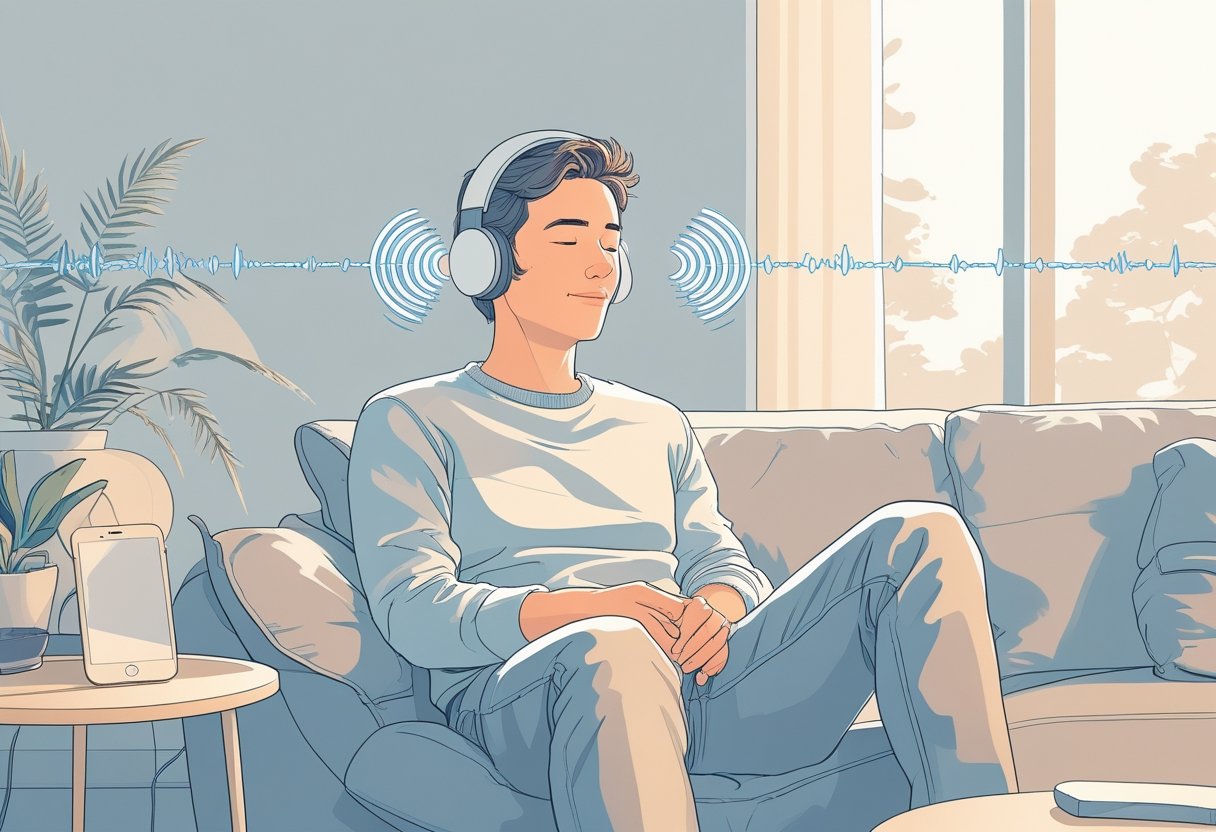
When you play binaural beats through speakers or your phone, the two separate frequencies mix together before they reach your ears. This means your brain can’t create the third tone that makes binaural beats work, though you’ll still hear relaxing music.
Using Speakers and the Issue of Cross-Contamination
Binaural beats don’t work without headphones because of something called cross-contamination. The two different frequencies need to reach each ear separately to create the desired effect.
When you use phone speakers or regular speakers, both tones mix in the air before reaching your ears. Your left ear hears both frequencies, and so does your right ear. This mixing happens instantly, which stops your brain from creating the third “phantom” beat.
The whole point of binaural beats is that each ear gets its own unique frequency. If a 200 Hz tone goes to your left ear and a 210 Hz tone goes to your right ear, your brain perceives a 10 Hz beat. But through speakers, both ears just hear a jumbled mix of 200 Hz and 210 Hz at the same time.
You will still benefit from the relaxing properties of the music, but you won’t get the brainwave entrainment effects.
Monaural Beats and How They’re Different
Monaural beats work differently than binaural beats because the two frequencies combine before reaching your ears. You can listen to them on any device without headphones.
These beats use the same frequencies as binaural beats but mix them together in the audio file itself. The mixing creates a pulsing sound that your ears can actually hear, unlike the phantom beat your brain creates with binaural beats.
Monaural beats can still help with relaxation and focus. They’re generated from amplitude-modulated signals that don’t require separation between your ears.
What Works and What Doesn’t
Without headphones, binaural beats become regular music with no special brain effects. The frequencies just blend together into background noise.
Isochronic tones are another alternative that work through speakers. These are pulsating tones that turn on and off rapidly, creating a clear rhythm your brain can follow. They sound like beeping rather than a smooth hum.
You can use your phone speakers or laptop to play isochronic tones and monaural beats with good results. But if you want actual binaural beats to work, you need headphones or earbuds that deliver different sounds to each ear separately.
Benefits of Listening to Binaural Beats With Headphones
Using headphones with binaural beats helps you experience deeper relaxation, enter focused mental states more easily, fall asleep faster, and achieve better meditation results than listening through speakers.
Deep Relaxation and Stress Relief
When you listen to binaural beats through headphones, each ear receives a different frequency that creates a third tone in your brain. This process helps activate specific brainwaves linked to calmness and reduced tension.
Alpha frequency binaural beats (8-13 Hz) work particularly well for relaxation. These frequencies encourage your brain to produce more alpha waves, which naturally occur when you’re calm and at ease.
Headphones make this effect stronger because they keep the two separate frequencies isolated in each ear. Without this separation, your brain can’t create the third tone properly, and you miss out on the full relaxation benefits.
The benefits of binaural beats for stress relief include lower anxiety levels and a greater sense of mental calm. Theta frequencies (4-8 Hz) can reduce anxiety even more as you enter that twilight state between waking and sleeping.
Enhanced Meditation and Mindfulness
Headphones help you achieve deeper meditation states by blocking out distractions and delivering precise frequencies to each ear. Delta wave frequencies (1-4 Hz) support the deepest meditation levels where your body releases beneficial hormones and chemicals.
Your brain naturally produces delta waves during deep sleep and profound meditation. When you use headphones with binaural beats at delta frequencies, you can reach these states more quickly than through traditional meditation alone.
The theta range also supports meditation by helping you maintain that in-between state where creativity flows and your mind stays somewhat aware. Many people experience increased creativity and even lucid dreams at these frequencies.
Stereo headphones ensure each ear receives its intended frequency without interference. This precision matters because even small changes in the frequency can shift which brainwaves become active and what mental state you experience.
Better Sleep and Overcoming Insomnia
Delta frequency binaural beats played through headphones can help you fall asleep faster and stay asleep longer. These low frequencies (1-4 Hz) match the brainwaves your body naturally produces during deep, restful sleep.
Using headphones blocks out environmental noise that might wake you up. Noise-canceling headphones work especially well if you live in a noisy area or share your sleeping space.
Theta frequencies help during the falling-asleep phase by guiding your brain into that drowsy twilight state. This makes the transition from waking to sleeping smoother and less frustrating if you struggle with insomnia.
Better sleep comes from the combination of blocked distractions and targeted brainwave activation. Your body can release more sleep-supporting hormones when delta waves are active, creating a natural sleep cycle.
Improved Focus and Flow State
Beta frequency binaural beats (14-30 Hz) help you concentrate better and stay motivated on tasks. These frequencies enhance focus and create ideal conditions for learning new information or working on complex projects.
Headphones deliver these focus-boosting frequencies directly to your brain without distortion from your environment. The flow state happens when you’re fully absorbed in what you’re doing, and beta waves support this mental clarity.
Gamma frequencies (30+ Hz) take focus even further by promoting intense concentration and creative problem-solving. These higher frequencies can spark new ideas and help you think in innovative ways.
The precision of headphone delivery matters most at these higher frequencies. Small variations in what each ear hears can throw off the intended effect, making speakers less effective for achieving a true flow state.
Best Practices for Listening to Binaural Beats
Getting the most from binaural beats means picking tracks that match your goals, creating a comfortable space to listen, and sticking with a regular schedule. These steps help you experience the effects more clearly and make listening to binaural beats a helpful part of your day.
Choosing the Right Binaural Beat Track
Your goals should guide which binaural beats tracks you pick. Different frequencies work for different purposes.
Delta waves (1-4 Hz) help with deep sleep and rest. Theta waves (4-8 Hz) work well for meditation and creativity. Alpha waves (8-13 Hz) are good for relaxed focus. Beta waves (13-30 Hz) boost concentration and problem-solving.
Start by identifying what you want to achieve. If you need better sleep, look for tracks with delta frequencies. For studying or work, beta frequencies make more sense.
Quality matters too. Choose high-quality tracks with clear frequencies that match your specific goals. Many apps let you customize the background sounds, so you can add nature sounds or soft music if that helps you relax.
Try different tracks to see what feels right. What works for someone else might not work for you, so give yourself time to experiment.
Setting Up Your Listening Environment
Your environment makes a big difference when listening to binaural beats. Find a quiet spot where interruptions are unlikely.
Pick a comfortable position, whether you’re sitting in a chair or lying down. Turn off your phone or put it on silent. Let others in your home know you need some uninterrupted time.
Headphones are essential for binaural beats to work properly. Each ear needs to hear a different frequency. Closed-back headphones work best because they block outside noise.
Keep the volume at a comfortable level. You should hear the tones clearly without them being too loud. Starting too loud can cause headaches or discomfort.
The space should feel calm and relaxing. Dim the lights if that helps you focus or unwind. Some people like to create a distraction-free zone specifically for their listening sessions.
Building a Listening Routine
Consistency helps you get better results from binaural beats. Set aside the same time each day to listen.
Morning sessions can help you start the day with focus. Evening sessions work well for winding down before bed. Pick whatever time fits your schedule and stick with it.
Start with shorter sessions of 15 to 30 minutes. As you get used to the experience, you can gradually increase to 30-60 minutes or longer. Some people benefit from listening for up to 90 minutes at a time.
Aim for daily listening if possible. Regular practice helps your brain respond better to the frequencies over time. Think of it like building any other habit—the more you do it, the more natural it becomes.
Track how you feel after each session. Notice any changes in your mood, focus, or sleep quality. This helps you figure out which tracks and times work best for your needs.
Alternatives to Binaural Beats When Headphones Aren’t an Option
If headphones aren’t comfortable for you or you can’t wear them due to health reasons, there are other sound options that can help with relaxation and meditation. These alternatives work through regular speakers and don’t require separate frequencies in each ear.
Trying Monaural Beats and Isochronic Tones
Monaural beats are similar to binaural beats but work differently. They combine two tones of different frequencies before they reach your ears. This means the mixing happens outside your head, not inside your brain like with binaural beats.
You can listen to monaural beats through any speaker. They still work to help with relaxation and anxiety, though monaural beats work better with headphones than regular speakers.
Isochronic tones are even simpler. These are single tones that turn on and off in a steady rhythm. Think of them like a pulse you can hear.
Isochronic tones work without headphones and can even play through your phone speaker. They offer similar benefits to binaural beats for meditation and stress relief. The rhythmic pulses help guide your brain into different states of relaxation.
Sound Therapy Options Without Headphones
Beyond beats and tones, you have other choices for audio relaxation. Regular meditation music or nature sounds work well through speakers. Rain sounds, ocean waves, and forest ambience can help you relax without any special equipment.
White noise machines are another option. They create steady background sounds that block out distractions and help some people sleep better.
Guided meditation recordings also work fine through speakers. The instructor’s voice leads you through relaxation techniques without needing any special sound frequencies. You get the calming effects of meditation practice itself rather than relying on specific audio technology.
Frequently Asked Questions
Headphones are required for binaural beats to work properly because each ear needs to receive a different frequency. Many people wonder about the safety of this technology and whether it actually delivers on its promises for sleep and focus.
Is it okay to play binaural beats out loud or do they require headphones to be effective?
You need headphones for binaural beats to work. When you play them through speakers, both ears hear both frequencies at the same time.
The whole point of binaural beats is that your left ear hears one frequency while your right ear hears a slightly different one. Your brain then perceives the difference between these two frequencies as a beat.
Without headphones, you’ll still hear relaxing music, but you won’t get the brainwave entrainment effects that make binaural beats special. The technology simply doesn’t function as intended when played out loud.
What are the benefits of using headphones when listening to binaural beats?
Headphones let your brain experience the frequency following response, which is what makes binaural beats actually work. Each ear receives its own separate signal, and your brain processes the difference between them.
For example, if your left ear receives 200Hz and your right ear gets 210Hz, your brain perceives a 10Hz beat. This process only happens when the two frequencies stay separated.
Using headphones also helps block out distractions from your environment. You can focus better on the beats and get into the right mental state more easily.
Are there particular headphones recommended for listening to binaural beats to get the best experience?
Any headphones will work when you’re just starting out. Both over-ear headphones and earbuds get the job done fine.
The main thing is making sure each ear gets its own signal clearly. You don’t need expensive audiophile headphones to benefit from binaural beats.
That said, comfortable headphones matter if you plan to listen for longer sessions. You’ll want something that doesn’t hurt your ears after 30 minutes or more.
Could listening to binaural beats potentially cause any harm to my hearing or brain?
Binaural beats aren’t addictive because they’re not chemicals. Your body can’t develop a dependency on them like it might with certain substances.
You should avoid listening to them while driving or operating machinery. Tracks designed for relaxation can slow down your reaction times and make you less alert.
Keep the volume at a reasonable level just like you would with regular music. Too much volume can damage your hearing no matter what you’re listening to.
Do binaural beats actually help with getting a good night’s sleep?
Delta frequency tracks are associated with sleep and deeper states of consciousness. Listening to these before bed can help your brain shift into a sleepy state.
If you listen to sleep-designed tracks around the same time each night, your brain starts to develop a routine. After a few nights, your mind begins moving into this restful state on its own at approximately the same time.
The key is picking the right type of track. You don’t want to listen to beta or alpha frequencies before bed because those wake your brain up instead of calming it down.
When studying or concentrating, do binaural beats improve focus if used with headphones?
Alpha tracks are linked to focus and flow states. These frequencies can help you concentrate better on your work or studies.
Setting up a routine works well here too. If you listen to focus tracks at the same time every day while working, your brain gets used to entering that concentrated state during those hours.
You can do other activities like reading or writing while listening to appropriate frequency tracks. Just make sure the track matches what you’re trying to accomplish.